
Class 6 English Worksheet Plot Structure Skills

Class 6 English Worksheet Plot Structure Skills
Story Flow Mastery: Plot Structure (Beginning, Middle, End) for Class 6
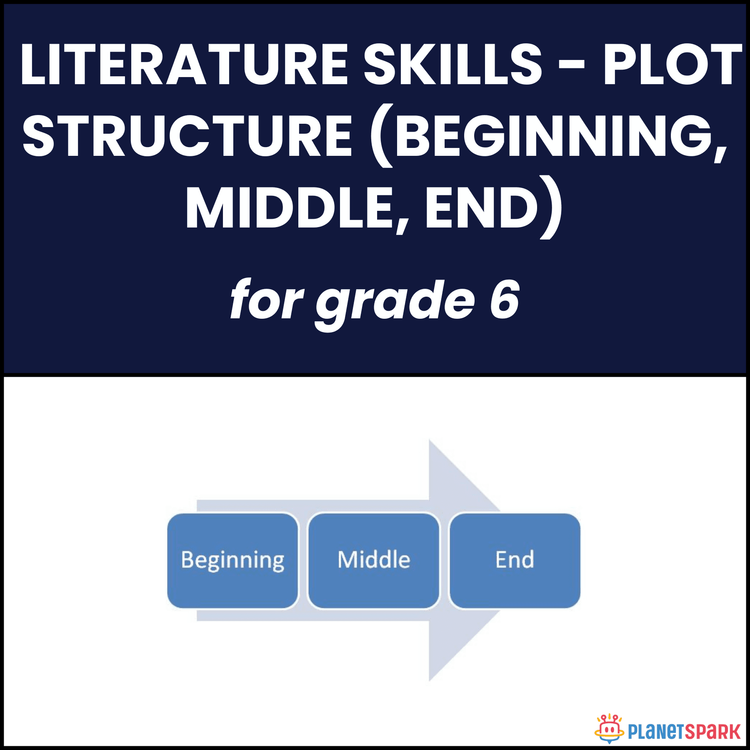
This Grade 6 worksheet focuses on Literature Skills – Plot Structure, helping students understand how stories are organized into Beginning, Middle, and End. Through engaging and structured activities, learners explore how events unfold, problems develop, and resolutions bring closure to a story.
Why Plot Structure Matters in Grammar?
Understanding plot structure is essential for building strong reading and writing skills. For Grade 6 learners, this topic is important because:
1. It helps students identify how a story starts, develops, and concludes.
2. It improves comprehension by recognizing key events like climax and resolution.
3. It supports better storytelling and paragraph writing skills.
4. It builds logical thinking and sequencing abilities in narratives.
What’s Inside This Worksheet?
This worksheet includes five engaging activities that strengthen understanding of plot structure:
🧠 Exercise 1 – Multiple Choice Questions
Students identify whether each event belongs to the Beginning, Middle, or End of a story.
✏️ Exercise 2 – Fill in the Blanks
Students complete a story using appropriate events from a word bank, building sequencing and comprehension skills.
📋 Exercise 3 – True or False
Learners evaluate statements about plot structure concepts like climax, resolution, and story flow.
📝 Exercise 4 – Underline the Plot Parts
Students identify and underline parts of sentences that reflect Beginning, Middle, or End stages.
✍️ Exercise 5 – Paragraph Writing
Students write a short paragraph using proper plot structure, applying their understanding creatively.
This worksheet helps children become confident readers and storytellers by strengthening their ability to organize ideas clearly and logically.
✅ Answer Key (For Parents & Educators)
Exercise 1 – Multiple Choice (Plot Stages)
1.a) Beginning
2.c) End
3.b) Middle
4.b) Beginning
5.a) Middle
6.b) Middle
7.c) Middle (Climax)
8.c) End
9.b) End
10.a) Beginning
Exercise 2 – Fill in the Blanks
1. joins a new school
2. loses her bag
3. searches classroom
4. feels worried
5. asks her friend’s help
6. finds the bag
7. prepares for exam
8. studies hard
9. feels happy
10. thanks her friend
Exercise 3 – True or False
1. True
2. False
3. False
4. True
5. True
6. True
7. True
8. False
9. False
10. True
Exercise 4 – Underline the Plot Parts
(Answers may vary – students underline Beginning, Middle, and End parts in each sentence correctly.) 1. Aditi joins a new college (Beginning) / struggles in class (Middle) / finally succeeds (End)
2. The boy starts his journey (Beginning) / faces challenges (Middle) / wins the race (End)
3. The child learns cycling (Beginning) / falls many times (Middle) / rides well (End)
4. They plan a trip for summer vacation (Beginning) / — (Middle implied) / enjoy the journey (End)
5. Ananya enters a competition (Beginning) / practices daily (Middle) / wins a prize (End)
6. She meets new friends (Beginning) / — (Middle implied) / learns lessons from her problems (End)
7. The team prepares hard to perform well (Beginning/Middle) / wins the match (End)
8. A girl starts school (Beginning) / works hard (Middle) / becomes successful (End)
9. Rahul moves to a city (Beginning) / makes friends (Middle) / who were not loyal (End/Outcome)
10. He begins training (Beginning) / improves skills (Middle) / becomes champion (End)
Exercise 5 – Paragraph Writing
(Answers may vary – students write a 5–6 line paragraph including clear Beginning, Middle, and End.) Riya joined a new school on her first day and felt both excited and nervous.
She met her classmates and started attending her classes regularly.
Soon, she faced a problem when she lost her bag during lunch break.
She searched everywhere and even asked her friends and teachers for help.
Finally, she found her bag near the library with the help of a friend.
In the end, she felt happy, thanked her friend, and became more confident in her new school.
Boost your child’s storytelling skills and help them structure ideas like a pro with guided expert support today.
🔖Book a free trial!
Frequently Asked Questions
Plot structure refers to the sequence of events in a story, including beginning, middle, and end.
They can look for the introduction of characters, the main events or conflict, and the resolution or conclusion.
It helps children organize stories logically and improves both reading comprehension and writing skills.